
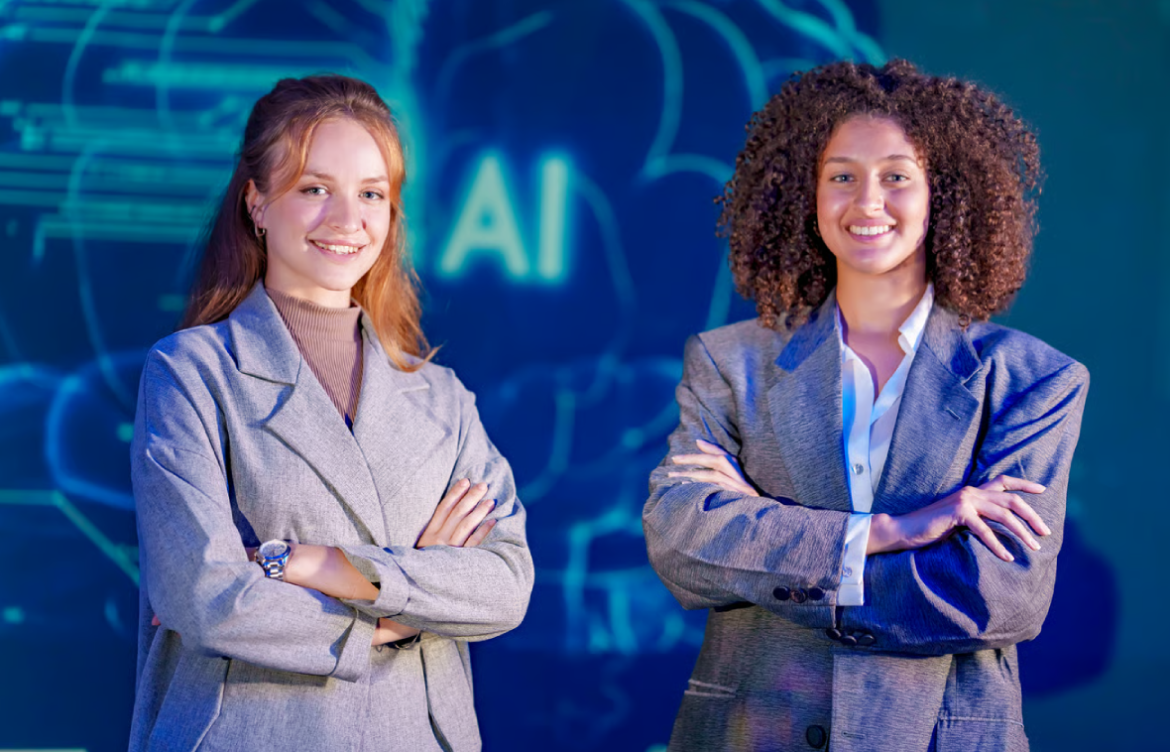
Women in AI
Artificial Intelligence (AI) is one of the fastest-growing fields in technology, shaping industries from healthcare to finance, education, and entertainment. Women in AI are making groundbreaking contributions, developing innovative solutions, and challenging biases in machine learning and algorithms. Their work not only advances technology but also ensures more ethical, inclusive, and human-centered AI.
Why Women in AI Matter
- Diverse perspectives: Women bring unique insights that reduce bias and improve AI fairness.
- Innovation leadership: Women lead research, product development, and AI ethics initiatives.
- Role models: Female AI professionals inspire girls and young women to pursue STEM careers.
- Ethical AI development: Women in AI often advocate for inclusive datasets, responsible algorithms, and transparency.
Prominent Women in AI
1. Fei-Fei Li – Visionary in Computer Vision
- Who she is: Professor of Computer Science at Stanford University and co-director of the Stanford Human-Centered AI Institute.
- Contribution: Developed ImageNet, a large-scale visual recognition dataset essential for modern computer vision and deep learning.
- Impact: Li’s work has driven advances in AI vision systems, enabling applications in healthcare, autonomous vehicles, and robotics.
2. Daphne Koller – AI and Education Innovator
- Who she is: Co-founder of Coursera and AI researcher.
- Contribution: Pioneered probabilistic graphical models and AI applications in online education.
- Impact: Koller’s work demonstrates AI’s potential to personalize learning and expand global access to education.
3. Joy Buolamwini – Advocate for Ethical AI
- Who she is: Founder of the Algorithmic Justice League.
- Contribution: Research on bias in facial recognition systems revealed disparities in AI performance across race and gender.
- Impact: Buolamwini’s advocacy promotes fairness and accountability in AI, influencing policymakers and technology companies.
4. Kate Crawford – AI Researcher and Ethicist
- Who she is: Senior Principal Researcher at Microsoft Research and co-founder of AI Now Institute.
- Contribution: Studies the social and ethical implications of AI, focusing on power, bias, and accountability.
- Impact: Crawford’s work ensures AI development considers societal consequences and inclusivity.
5. Rana el Kaliouby – Leader in Emotion AI
- Who she is: CEO and co-founder of Affectiva, an AI company focused on emotion recognition.
- Contribution: Developed AI systems that analyze human emotions from facial expressions and vocal cues.
- Impact: Her work improves human-computer interaction, enhancing applications in healthcare, marketing, and automotive safety.
Key Areas Where Women Are Leading in AI
- Computer Vision: Image recognition, medical imaging, autonomous vehicles.
- Natural Language Processing (NLP): Language translation, chatbots, sentiment analysis.
- Ethical AI & Bias Mitigation: Ensuring AI systems are fair, transparent, and inclusive.
- Robotics & Human-AI Interaction: Designing AI that interacts safely and effectively with humans.
- AI in Healthcare: Diagnostics, personalized medicine, and predictive analytics.
Challenges Women Face in AI
- Gender imbalance: Women are underrepresented in AI research and leadership roles.
- Bias in datasets and models: Women often advocate for ethical practices in AI development.
- Lack of mentorship: Limited access to experienced mentors in AI and machine learning.
- Workplace culture: Navigating male-dominated environments can be challenging.
Despite these challenges, women in AI are thriving, leading research labs, startups, and global initiatives.
How Women Can Succeed in AI
- Build strong technical foundations: Learn Python, R, TensorFlow, PyTorch, and data science fundamentals.
- Pursue advanced education: Degrees or online courses in AI, machine learning, or data science.
- Engage in AI research or projects: Work on real-world AI problems and contribute to open-source projects.
- Join AI communities: Participate in mentorship programs, workshops, and networks like CodeByHer, Women in Machine Learning (WiML), or AI Now.
- Advocate for ethical AI: Promote inclusion, fairness, and responsible AI practices.
Conclusion
Women in AI are shaping the future of technology with creativity, expertise, and ethical leadership. From pioneering computer vision systems to addressing algorithmic bias, they are driving innovation and inclusivity in AI.
At CodeByHer, we support women in AI by providing mentorship, resources, and community guidance. By learning from these leaders, aspiring women can build successful careers in AI, develop transformative solutions, and help shape a more equitable and technologically advanced world.