
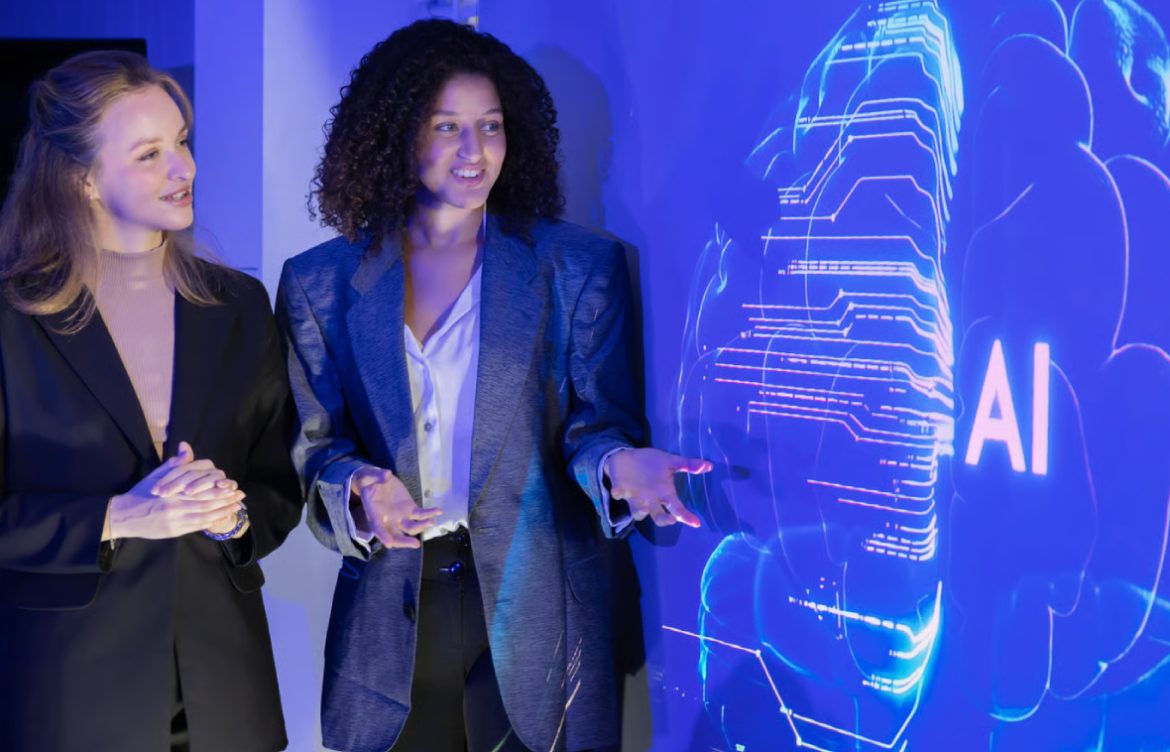
Women in Artificial Intelligence
Artificial Intelligence (AI) is one of the most transformative technologies of our time, reshaping industries, enhancing decision-making, and creating innovative solutions. Yet, despite its growth, women remain underrepresented in AI. Highlighting the achievements of women in AI not only celebrates their contributions but also inspires the next generation of female technologists. In this guide, we’ll explore women leaders in AI, their impact, and how aspiring women in tech can follow in their footsteps.
Why Women in AI Matter
Diversity in AI is critical for innovation and fairness. Women bring unique perspectives that can:
- Reduce Bias: Diverse teams design AI systems that are fair and inclusive.
- Enhance Creativity: Different viewpoints foster innovation and problem-solving.
- Promote Ethical AI: Women often advocate for responsible, human-centered AI design.
- Inspire Future Generations: Female role models encourage young women to pursue STEM careers.
Encouraging women in AI ensures the technology serves all people equitably and effectively.
Inspiring Women Leaders in AI
1. Fei-Fei Li
Who She Is: Co-Director of the Stanford Human-Centered AI Institute and former Chief Scientist at Google Cloud AI.
Contributions:
- Pioneered ImageNet, a large-scale image database crucial for computer vision advancements.
- Advocates for human-centered AI that complements human intelligence.
Impact: Fei-Fei Li’s work laid the foundation for breakthroughs in computer vision and AI ethics.
2. Cynthia Breazeal
Who She Is: Founder of the Personal Robots Group at MIT Media Lab.
Contributions:
- Developed social robots that interact naturally with humans.
- Advanced research on human-robot interaction and emotional AI.
Impact: Pioneered AI systems that can engage empathetically with people, influencing education and healthcare technologies.
3. Rana el Kaliouby
Who She Is: Co-founder and CEO of Affectiva, an AI company specializing in emotion recognition.
Contributions:
- Developed AI capable of analyzing human emotions from facial expressions.
- Advocates for ethical AI in emotional computing.
Impact: Her work helps create AI systems that understand human feelings, improving human-computer interactions.
4. Manuela Veloso
Who She Is: Head of AI Research at JPMorgan and a professor at Carnegie Mellon University.
Contributions:
- Advanced research in robotics and multi-agent systems.
- Focused on AI that learns from collaboration and interaction.
Impact: Veloso’s work enhances autonomous systems and collaborative AI applications.
5. Daphne Koller
Who She Is: Co-founder of Coursera and professor at Stanford University.
Contributions:
- Developed online education platforms integrating AI and machine learning.
- Conducted research in probabilistic reasoning and bioinformatics.
Impact: Koller’s initiatives democratize AI education, making it accessible to millions worldwide.
How Women Are Shaping AI Today
Women in AI are not just researchers; they are innovators, educators, entrepreneurs, and advocates:
- Entrepreneurs: Founding AI startups addressing healthcare, education, finance, and accessibility.
- Policy Advocates: Guiding AI governance, ethics, and fairness in technology deployment.
- Educators & Mentors: Teaching AI skills and mentoring the next generation of women in tech.
- Researchers & Developers: Building algorithms, models, and applications that impact daily life.
Their work ensures AI is not only technically advanced but also socially responsible.
How Aspiring Women Can Enter AI
- Start with Learning: Take online courses in AI, machine learning, and data science. Platforms like Coursera, Udemy, and CodebyHer offer beginner-friendly paths.
- Work on Projects: Build hands-on projects to apply AI concepts and develop a portfolio.
- Join Communities: Engage with women-in-tech networks, AI forums, and mentorship programs.
- Seek Mentorship: Learn from experienced women in AI to guide career decisions and project development.
- Stay Updated: AI evolves quickly—follow research papers, blogs, webinars, and conferences.
- Advocate for Ethics: Incorporate ethical practices and inclusivity in your AI projects from day one.
By combining technical skills, hands-on experience, and ethical awareness, women can thrive in AI and inspire others.
Breaking Barriers in AI
Women entering AI often face challenges such as underrepresentation, gender bias, and lack of mentorship. Overcoming these challenges requires:
- Confidence: Believe in your skills and potential.
- Networking: Connect with peers, mentors, and role models in AI.
- Visibility: Share your projects, research, and achievements publicly.
- Continuous Learning: Stay curious and open to evolving technologies and methodologies.
Communities like CodebyHer provide guidance, mentorship, and a supportive network to help women navigate these challenges successfully.
Conclusion
Women have played—and continue to play—an essential role in shaping the AI landscape. From pioneering research to entrepreneurial ventures, female leaders in AI are creating innovations that are ethical, inclusive, and impactful. For aspiring women in tech, their achievements serve as a roadmap and a source of inspiration.
At CodebyHer, we aim to empower women to enter AI with confidence, develop hands-on skills, and contribute to meaningful projects. By learning, building, and collaborating, women can not only succeed in AI careers but also help shape the future of technology in a way that benefits everyone.
The future of AI is inclusive, diverse, and female-driven—and it starts with taking the first step today.